Distinguishing Bacterial Leaf Spots from Fungal Leaf Spots: A Comprehensive Guide
When it comes to keeping plants and trees healthy, few things are more frustrating than discovering discolored or damaged leaves. Leaf spot diseases can weaken a plant, reduce its aesthetic appeal, and in severe cases, even threaten its longevity. Two of the most common causes of leaf spot disease are bacteria and fungi. Although these pathogens produce some similar-looking symptoms, there are certain distinctive signs that can help you differentiate one from the other. Understanding whether your leaf spot is bacterial or fungal can lay the groundwork for proper treatment and, ultimately, for healthier plants.
This guide provides a detailed overview of how bacterial leaf spots differ from fungal leaf spots. We’ll explore their visual indicators, how each pathogen spreads, what conditions favor disease development, and how to manage or prevent these issues from recurring. You’ll find plenty of practical tips and insights, helping you make an informed decision about appropriate strategies and whether you should consult a professional for added peace of mind.
Why Accurate Identification Matters
Accurate identification ensures that you use the right disease management strategies. While both bacterial and fungal pathogens can sometimes be controlled with improved sanitation, cultural practices, and specific treatments, the exact approach can differ:
- Bacterial infections may respond best to bactericides or copper-based sprays, coupled with water management and sanitation measures.
- Fungal infections tend to be managed with fungicides (sometimes requiring repeated applications) and by adjusting conditions to reduce humidity around leaves.
Using the wrong treatment can waste time, money, and potentially lead to further damage or disease spread. That’s why noticing key visual traits can save you both frustration and resources. Below, we’ll examine the characteristics you should look for in bacterial leaf spots versus fungal leaf spots.
Spotting Bacterial Leaf Spot Symptoms
Bacterial pathogens often enter plant tissue through natural leaf openings (such as stomata) or through wounds. Once inside, they can spread quickly under warm, humid conditions. Here’s how to spot bacterial infections:
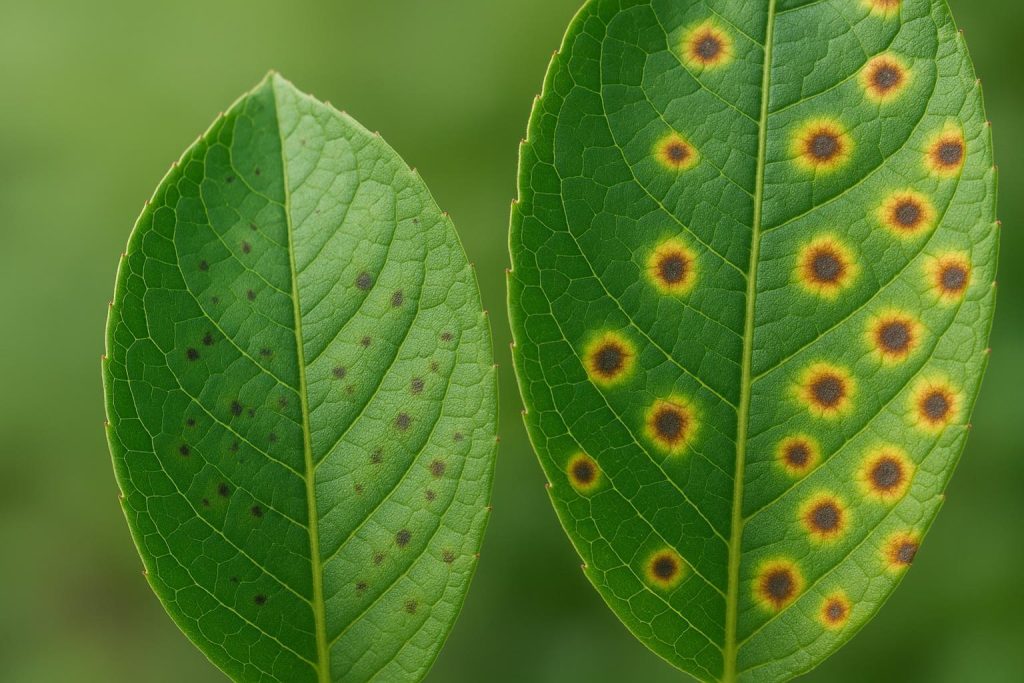
- Water-Soaked Lesions: Bacterial leaf spots often have a “wet,” translucent look. In early stages, you might notice a greasy or water-soaked ring around the lesion.
- Yellow Halo: A bright yellow halo commonly surrounds bacterial spots. This halo indicates the plant’s attempt to wall off the infection by creating localized tissue damage.
- Lesions Merging Over Time: As the disease progresses, single spots can merge to form larger blotches. The affected area may turn brown or black, leading to extensive tissue death if left unchecked.
- Sticky Ooze or Residue: In some bacterial infections, you might notice a sticky residue on the leaf surface or exuding from lesions, especially in overly damp conditions.
- Foul Odor (in Certain Cases): Though not always apparent outdoors, some bacterial infections can produce a slightly unpleasant smell if the leaf tissue is heavily decayed.
While these visual clues are helpful, you can only confirm bacterial pathogens with certainty through laboratory testing, such as cultures. That said, the presence of a distinct water-soaked appearance and yellow halo often points strongly to a bacterial culprit.
Spotting Fungal Leaf Spot Symptoms
Fungal leaf spot diseases are caused by a variety of fungal species. Fungi produce spores that can be transferred by wind, water splash, or even on gardening tools. Fungal spots typically begin as small, discrete areas but can spread across the leaf if conditions remain favorable. Common signs include:
- Dry, Brown Lesions: Many fungal pathogens create lesions that appear dry and brownish, though other colors (like tan, gray, or black) can also develop depending on the fungus and plant species.
- Concentric Patterns or Rings: Under certain fungi, you may see concentric rings or “bull’s-eye” patterns inside the lesion. This layered look distinguishes some fungal leaf spots from bacterial spots.
- Fungal Growth on the Surface: In warm, humid weather, you might notice powdery, downy, or velvety growth on the lesion itself. This is especially common on the underside of leaves.
- Sporulation Structures: Tiny black dots or raised structures may appear within the lesion. These may be fungal fruiting bodies (spores) visible to the naked eye or with a magnifying glass.
- Gradual Tissue Death: As the infection spreads, affected areas become necrotic (dead tissue). Leaves may yellow around the lesions and drop prematurely.
The Overlap and Common Confusions
Distinguishing between bacterial and fungal leaf spots can sometimes be challenging. Several factors can cause overlap or confusion:
- Environmental Conditions: Both bacteria and fungi thrive in moist, warm conditions. If your plants are consistently wet—due to overwatering, rainfall, or high humidity—you can see both types of pathogens flourish, making it more difficult to determine the precise cause.
- Secondary Infections: In some cases, a leaf may be initially colonized by bacteria, only to be followed by opportunistic fungi. Alternatively, fungus-weakened leaves can develop bacterial infections. This dual infection complicates identification.
- Visual Similarities: Early fungal infections can sometimes look water-soaked, and certain bacteria can create spots that dry out over time. Relying on color alone is rarely a foolproof diagnostic method.
If uncertainty persists, collecting a sample and consulting with trained horticultural experts, extension services, or plant pathologists can help you pinpoint the exact pathogen.
Environmental Factors That Influence Leaf Spots
Whether bacterial or fungal, most leaf spot diseases intensify under particular environmental conditions:
- Excess Humidity: Prolonged leaf wetness, high humidity, and poor air circulation favor pathogen development. Bacteria and fungi need a moist surface to penetrate and infect leaf tissue.
- Warm Temperatures: Temperatures between 20–30°C (68–86°F) are often ideal for both bacterial and fungal growth. In these conditions, spores germinate and bacterial populations multiply rapidly.
- Plant Stress: Weakened or stressed plants are more prone to infections. Stressors might include nutrient deficiencies, transplant shock, drought, or mechanical damage.
- Overhead Irrigation: Watering from above can splash pathogens from leaf to leaf. If you combine overhead irrigation with dense planting, you create a prime environment for disease spread.
Managing Bacterial Leaf Spots
Once you suspect a bacterial infection, consider the following strategies:
- Remove Infected Tissue: Prune away leaves showing early signs of disease. Proper disposal by bagging or burning prevents bacteria from spreading.
- Improve Air Circulation: Space your plants properly and thin overgrown areas. Better airflow helps leaves dry faster, minimizing bacterial growth.
- Water Carefully: Avoid overhead irrigation if possible. Instead, water at the soil level to prevent water splash. This can be pivotal in reducing bacterial spread.
- Use Bactericides or Copper Sprays: In severe cases, a copper-containing product or another bactericide may help in controlling the spread. Many gardeners, however, try cultural methods first since chemical control of bacterial diseases can be limited.
- Sanitize Tools: Frequently disinfect gardening tools—especially after removing infected foliage. This step reduces the likelihood of carrying bacteria from one plant to the next.
Patience is key when dealing with bacterial leaf spots. Some infections may persist, but consistent management practices typically keep the disease under control.
Managing Fungal Leaf Spots
Fungal leaf spot diseases can often be contained through timely interventions and preventative measures:
- Use Fungicides Strategically: Fungicides can be effective, but timing is crucial. Apply them before or at the very onset of noticeable symptoms. Reapplications may be necessary, especially if rainy, humid weather persists.
- Remove and Destroy Infected Leaves: Dispose of infected plant material to limit spore dispersal. Fungal spores can reside in leaf debris and spread the following season.
- Allow Adequate Spacing: As with bacterial infections, good airflow around plants reduces humidity levels. Proper spacing, pruning, and the removal of lower leaves can diminish fungal proliferation.
- Mulch Properly: Mulching helps retain soil moisture without raising humidity around leaves. Keep mulch a bit away from the stem to discourage fungal growth near the plant base.
- Rotate Crops (for Edibles): If you’re dealing with leaf spot on vegetables, rotating crops each year to a different garden bed can break fungal life cycles in the soil.
Along with these basic steps, some gardeners find success with biofungicides—products containing beneficial microbes that outcompete or inhibit pathogenic fungi. Consistent monitoring and proactive measures typically keep fungal problems from overwhelming your plants.
Dealing with Severe Infections
In advanced cases where symptoms spread quickly and damage is extensive, consider stronger interventions. Certain plant species are more prone to bacterial or fungal attacks, and older or highly susceptible plants may require professional diagnostics and treatment. For ornamental or shade trees, professional tree spraying may be recommended if fungal pathogens are significantly impacting canopy health. Timely assessments are critical to prevent further stress on the plant and to maintain the health of surrounding vegetation.
While severe infections shouldn’t be ignored, it’s also important not to overreact by applying broad-spectrum chemicals indiscriminately. Ongoing observation, accurate diagnoses, and targeted treatments will usually provide a safer and more effective resolution.
Best Cultural Practices for Prevention
Prevention remains one of the most practical strategies to protect plants from bacterial or fungal pathogens. Adequate planning and maintenance can keep your garden or landscape healthy year after year:
- Select Disease-Resistant Varieties: Many flowers, vegetables, and ornamental plants are bred for disease resistance. Choosing these varieties can cut down on your risk significantly.
- Plant in Well-Draining Soil: Waterlogged conditions encourage pathogen growth. If your soil is heavy clay, consider raised beds or incorporate organic material to improve aeration and drainage.
- Proper Fertilization: Overfertilization can lead to fast, weak growth that’s susceptible to disease, while underfertilization can stress plants. Follow soil test recommendations to supply the correct nutrient balance.
- Water Early in the Day: When using overhead watering (if drip irrigation isn’t an option), do so early so that leaves have ample time to dry before evening.
- Clean Up Debris: Remove and destroy fallen leaves and plant debris at the end of each season. This step can drastically reduce overwintering pathogens.
Even the most meticulous growers can sometimes face leaf spot problems, but these cultural measures typically go a long way toward minimizing serious outbreaks.
When to Seek Additional Help
Sometimes, despite careful monitoring and good growing conditions, leaf spot diseases catch you off-guard. If you’ve tried basic remedies but continue observing widespread leaf damage, consider seeking advice from plant professionals or extension agencies. These experts often provide the following benefits:
- Accurate Sampling and Testing: They can take leaf samples to analyze under a microscope or culture the pathogen in a lab, giving you definitive identification.
- Customized Treatment Plans: A professional can offer targeted recommendations about spraying schedules, fungicide or bactericide selection, and improved cultural practices.
- Comprehensive Solutions: By looking at your entire landscape, professionals may identify other underlying factors—such as soil pH imbalances or insect infestations—that could be weakening your plants.
If you discover that your trees—especially mature or ornamental species—are struggling due to chronic fungal leaf spot, you may benefit from specialized tree care services. For instance, certain times of year may be better for professional tree spraying to prevent spore spread and reinforce your tree’s health. Seeking an expert assessment can ultimately save you time, protect valuable plants, and ensure your landscape remains vibrant.
Final Thoughts on Identifying and Managing Leaf Spots
Bacterial and fungal leaf spot diseases can look deceptively similar, but a few key traits—like water-soaked halos for bacteria and concentric rings or spore structures for fungi—often guide you toward an accurate diagnosis. Beyond visual cues, prevention through healthy horticultural practices remains essential. Good airflow, avoiding overhead watering, removing infected debris, and selecting disease-resistant cultivars can be the difference between a thriving garden and one overrun by spots.
If you find the problem escalating or you’re unsure how to proceed, don’t hesitate to get a second opinion. Knowledgeable professionals or extension service staff can recommend precise treatments and even perform lab tests for a definitive diagnosis. Addressing leaf spot disease early not only keeps your plants looking their best but also provides them the resilience they need to withstand other common stresses throughout the growing season.
Need further guidance? If you think you’re dealing with a serious fungal leaf spot issue—or if you just want an expert set of eyes on your trees—feel free to explore professional solutions. Whether it’s a smaller ornamental shrub or a beloved shade tree, timely treatment and prevention can make all the difference. With effective strategies in place, you’ll enjoy healthier, more vibrant foliage for seasons to come.