
Why Removing a Hornet’s Nest Requires Careful Consideration
Encountering a hornet’s nest on or around your property can be a stressful experience. Hornets are known for their aggressive nature when they feel threatened, and their stings can pose a significant health risk to people and pets—especially for anyone with allergies or heightened sensitivity. Many homeowners wonder whether it makes sense to remove a hornet’s nest themselves, call an experienced pest control professional, or leave it alone to avoid confrontation.
This guide explores the key aspects of hornets and their nests, providing you with the knowledge you need to make an informed decision. From understanding hornet behavior to taking practical steps that protect your property, we hope to offer clarity and reassurance. Taking a measured approach is crucial—it’s about balancing your safety, the surrounding environment, and the best long-term solution.
Understanding Hornet Behavior
Hornets are a type of wasp, generally larger than the common paper wasp or yellow jacket. They tend to build paper-like nests in sheltered areas such as under eaves, in tree branches, inside sheds, or within dense shrubbery. Hornet colonies often reach their peak population in the warmest months, meaning activity around nests is significantly higher during mid to late summer.
Unlike solitary insects, hornets share caretaking responsibilities for the entire colony. They gather materials (like cellulose from wood or small plant fibers) to expand and reinforce their nests. If they sense that their nest is threatened—whether by a curious pet, children playing too close, or a homeowner trying to knock it down—they can become highly defensive. This is when stings become most likely.
Identifying a Hornet’s Nest
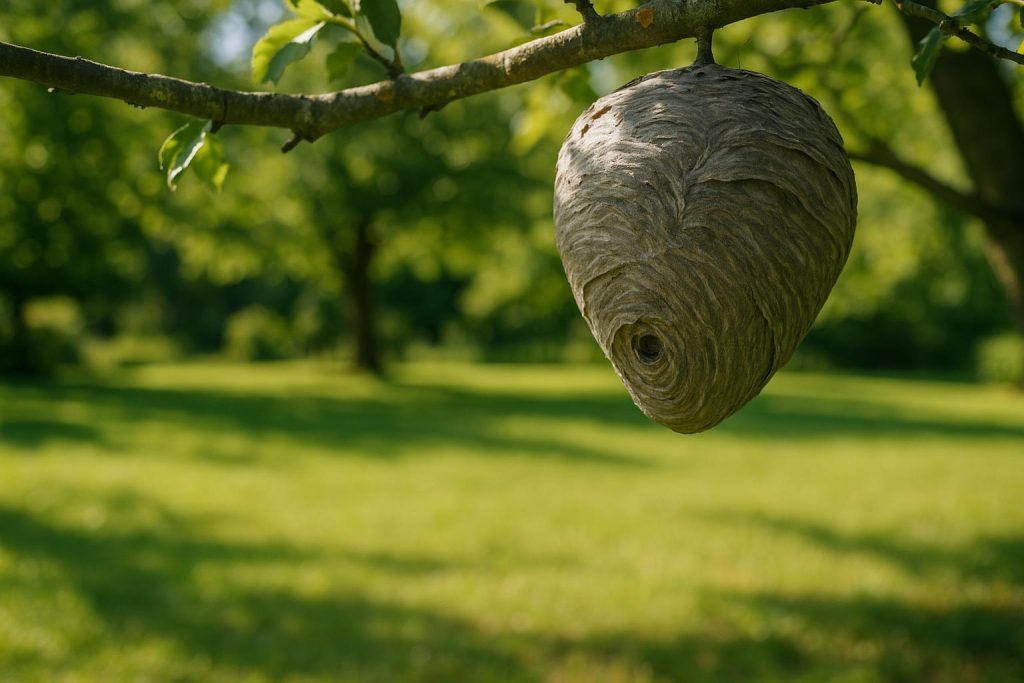
A hornet’s nest typically looks like an oval or spherical structure with a papery exterior. You might see hornets flying in and out of an opening, which is usually located near the bottom of the nest. Generally, these nests can grow to the size of a football by late summer. The color of the nest can range from grayish-white to brown, depending on the building materials the hornets have collected.
Make sure to confirm that what you’re seeing is indeed a hornet or wasp nest and not a honeybee hive. If you are unsure, avoid experimenting and contact a knowledgeable professional for identification. Keep in mind that Birch Fumigators does not provide bee pest control services. For bees, a specialized beekeeper or swarm catcher is typically recommended, while hornets and other wasps fall under a different category and may require professional wasp removal methods.
Why You Might Consider Removal
There are a few common reasons people opt to remove a hornet’s nest from their property:
- Allergy Concerns: A sting from a hornet can trigger a serious allergic reaction in certain individuals, sometimes leading to hospitalization. If anyone in your household (or a frequent visitor) has a known allergy, removing the nest can be a safety precaution.
- Frequent Activity Nearby: When a nest is constructed near doorways, decks, play areas, or patios, hornets can easily come into contact with people or pets. The risk of accidental disturbance is high, and the consequences can be dangerous.
- Property Damage Risks: In some rare cases, nests built in wall voids or attics may lead to structural issues, especially if moisture or other factors compromise the integrity of the home.
- General Safety: Hornets can swarm if they feel threatened. By eliminating a nest that’s too close to daily activity, you reduce potential stings and maintain peace of mind.
When It May Be Safe to Leave the Nest Alone
Not every hornet’s nest needs to be removed. In some cases, you might determine it’s best to leave it alone until the season changes or until you can assess the risks more carefully. For instance:
- Location Is Remote: If the nest is far from regular foot traffic and not near doors, windows, or outdoor gathering spaces, the chance of accidental disruption is lower.
- End of Season: In colder climates, hornets and wasps typically die off in the winter, leaving nests abandoned. If it’s already late in the fall and the nest isn’t posing an immediate threat, you might prefer waiting until it’s fully vacated. Nests are rarely reused the following year, although other insects sometimes repurpose the material.
- Minimal Risk: If no family members or neighbors have allergies, and if the nest is small and the colony is less active, you could decide to adopt a watchful waiting approach. You should still keep your distance, though.
Keep in mind that waiting it out is only prudent if you’re absolutely sure the nest isn’t near a high-traffic area or a potential hazard. Hornets can still sting, and they don’t always need a significant trigger to become defensive.
Potential Hazards of DIY Removal
At first glance, you might think knocking down the nest with a long stick or spraying an over-the-counter wasp chemical is enough to solve the problem. However, tackling hornet removal on your own can be more challenging—and hazardous—than it seems. Hornets are quick to defend their colony, and those who attempt a do-it-yourself approach often underestimate just how aggressive these insects can be.
Lack of Proper Gear: Successful nest removal generally requires specialized protective gear, including thick clothing and a veil or face shield to protect the head and neck. A standard jacket or a pair of gardening gloves may not be sufficient, especially if the colony is large and the hornets are agitated.
Incorrect Timing: Hornets are less active at night and during cooler temperatures, so many individuals assume that attempting removal in the evening solves the problem. While that approach can reduce activity, disturbing the nest can still lead to stings if hornets are caught off guard.
Limited Effectiveness: Sprays and other over-the-counter products can kill some hornets upon contact but may not reach the queen or fully penetrate the nest structure. As a result, the colony may quickly rebuild, causing frustration and ongoing risk.
Why Professional Help Is Advised
Consulting with a trained pest control technician often provides the safest and most reliable outcome. Professionals know how to assess the nest’s location, gauge colony size, and use treatments designed to effectively neutralize hornets without creating a larger disturbance.
At Birch Fumigators, for instance, we approach hornet and wasp removal with methods that prioritize safety for people, pets, and the surrounding environment. While we reserve humane methods for certain wildlife situations (like squirrels or skunks), hornets typically require targeted treatments that eliminate active colonies. Our process involves thorough inspection, carefully chosen products, and responsible disposal of any nest materials, so you don’t have to worry about the problem returning.
Furthermore, removing a nest often isn’t the final step. There could be gaps or openings in your structure that encourage wasps or hornets to rebuild. During a professional service, technicians typically check for these vulnerabilities and advise on sealing cracks, adding screens, or adjusting outdoor conditions to lessen the likelihood of future infestations. Learn more about our wasp and hornet control services if you want a comprehensive solution that covers both elimination and prevention.
Best Practices for Safe Nest Removal
If you decide to remove the nest—whether you do it yourself under very cautious circumstances or hire a professional—keep these best practices in mind:
- Consult Experts First: If there’s any doubt, reach out to a pest control professional. Expertise can help prevent unnecessary risks.
- Use Protective Clothing: A high-quality bee suit, veil, and gloves are recommended, even if you believe the nest is small or the colony is dormant. Quick reflexes of hornets can surprise the unprepared.
- Choose the Right Timing: Evening or early morning might be ideal, when hornets are less active. However, “less active” does not mean “harmless.” Always remain alert.
- Aim for Full Removal: Simply knocking down part of the nest isn’t enough. Pieces of the nest can remain, and surviving members of the colony will attempt to rebuild if the queen is still alive. The entire colony must be treated and the nest fully removed.
- Dispose Properly: Once removed, seal the nest in a durable, sealed bag to prevent any remaining hornets from escaping. Place it in a secure outdoor trash container for proper disposal.
- Fix Entry Points: Be sure to inspect your home or nearby structures for small cracks or openings. Hornets can sometimes rebuild near their former nest if they find a suitable spot. Sealing gaps in window frames, eaves, or soffits will reduce chances of reinfestation.
Seasonal Considerations
Hornet and wasp activity is deeply tied to the seasons. In spring, queens emerge from winter hiding, seeking suitable nest sites to begin building. Throughout summer, the colony grows, sometimes quite rapidly. By late summer, a nest can host hundreds or even thousands of hornets if conditions are favorable. As cooler temperatures approach in autumn, many hornets die off, leaving only the queen to overwinter elsewhere.
Because of these seasonal trends, scheduling nest removal in late spring or early summer can prevent the colony from reaching its full size. For homeowners discovering a nest in midsummer or early fall, removal can still be done effectively, but the colony may be larger, requiring added caution and thorough treatment.
Preventing Future Hornet Nests
While there is no foolproof way to guarantee that hornets will never return, you can reduce the likelihood of new nests forming:
- Trim Overhanging Branches: Hornets often build nests in trees. Regular pruning can make these spaces less appealing. Also remove dead or rotting wood nearby, as hornets use wood fibers to build their nests.
- Eliminate Food Sources: Keep garbage cans tightly sealed and avoid leaving fallen fruit in your yard for extended periods. Hornets are attracted to sweet foods and protein sources.
- Inspect Regularly: Spend a few minutes surveying your property each week, especially in spring. Early detection of a small nest can make removal safer and simpler.
- Secure Entry Points: Repair torn screens and seal gaps in exterior walls. Hornets look for sheltered spaces—even small cracks or holes can be inviting spots to start building.
Balancing Safety and Peace of Mind
Deciding whether you should remove a hornet’s nest often hinges on a blend of personal comfort, potential risks, practicality, and timing. While some homeowners choose to wait for winter die-off if the nest is not in a hazardous spot, others prefer immediate removal to safeguard against stings and potential property damage. The most important considerations remain your safety, as well as the well-being of anyone else who shares or visits your property.
If handling the problem yourself feels overwhelming, it’s wise to consult a professional pest control provider. They will not only help eliminate the existing nest but also guide you on how to keep future infestations at bay. Understanding the seasonal dynamics, adopting regular inspections, and securing your home against potential nesting sites are all valuable steps toward maintaining a safe, hornet-free environment.
Still Have Questions?
Removing a hornet’s nest is a significant undertaking, and it’s normal to have concerns about doing it safely. If you’re unsure where to start or have a particular situation that needs expert attention, we’re here to help. Still have questions? Feel free to contact our team for expert advice. We understand how unsettling a hornet nest can be, especially if it’s interfering with your home life. Our experienced professionals can help you determine the right approach to keep your household safe and provide long-term peace of mind.