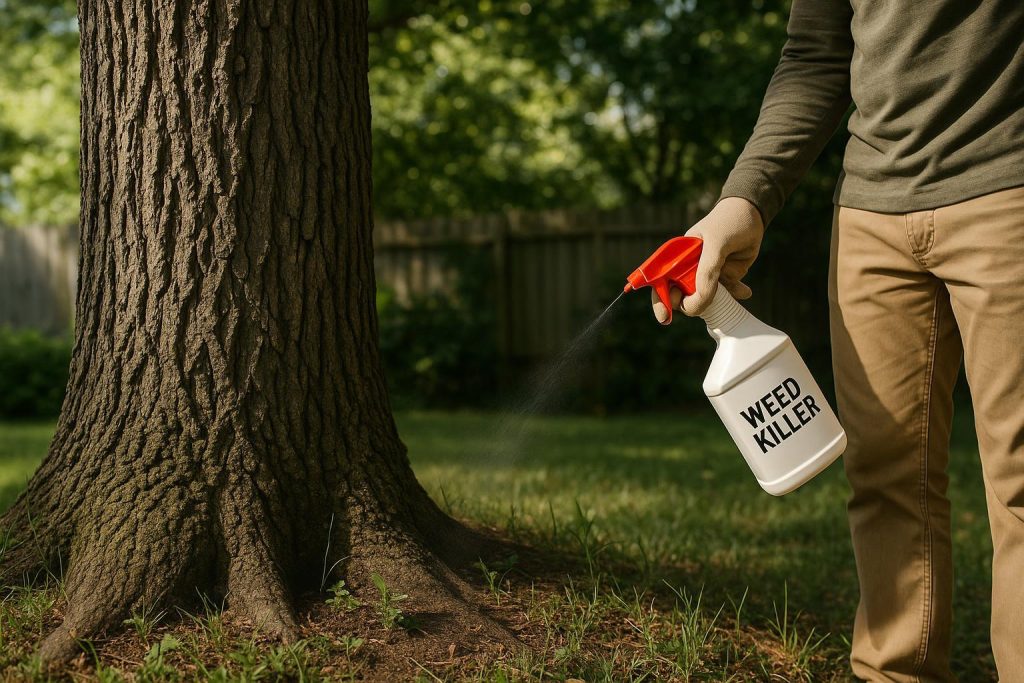
Yes, Roundup and other glyphosate herbicides can damage or potentially kill a tree if they contact susceptible living tissue. However, spraying weeds near a mature tree does not automatically mean the tree will die.
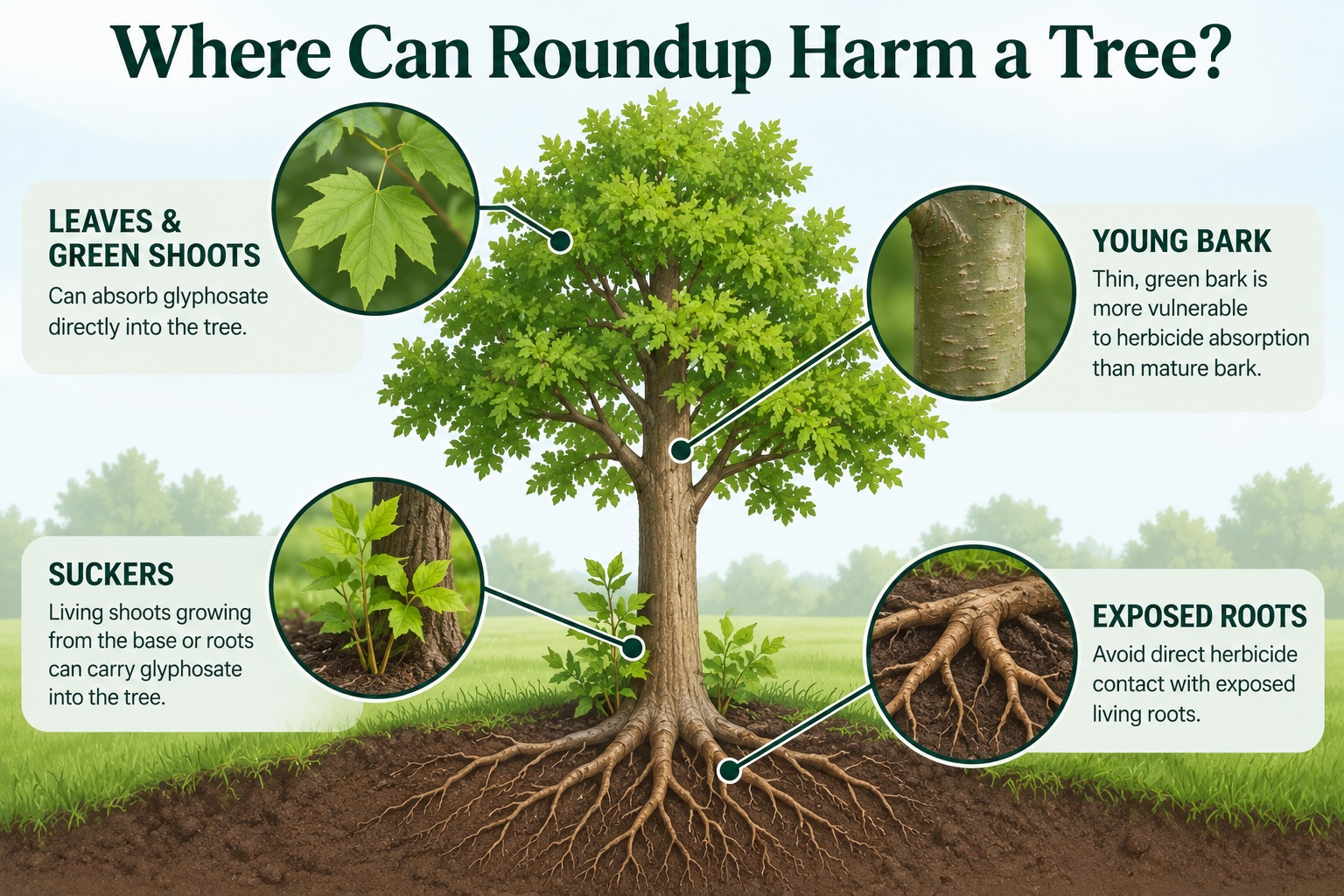
The greatest risk comes from getting glyphosate directly on leaves, green shoots, suckers, exposed roots, wounds, or young bark. Young trees are generally more vulnerable than mature trees with thick, established bark.
If you’re using weed control around trees in Edmonton or elsewhere in Alberta, always check the label of the specific product. Roundup is a brand name, and formulations can differ. Health Canada requires pesticides to be used according to their registered labels. You can check products using the Health Canada Pesticide Label Search.
How Can Roundup Damage a Tree?
Glyphosate is a systemic, non-selective herbicide. Once absorbed through susceptible plant tissue, it moves within the plant and interferes with processes required for growth.
For trees, the main concern is direct contact with living tissue:
- Leaves and green shoots: Glyphosate can be absorbed through foliage.
- Suckers: Spraying shoots growing from the trunk or roots may expose the tree.
- Young bark: Saplings and newly planted trees have thinner bark and are more vulnerable.
- Exposed roots and wounds: Avoid spraying directly onto exposed living tissue.
- Spray drift: Wind can carry herbicide onto foliage you didn’t intend to treat.
Health Canada requires measures to reduce glyphosate spray drift because of the potential for damage to non-target plants.
Can Tree Roots Absorb Roundup From the Soil?
Glyphosate is primarily absorbed through green plant tissue. Once it reaches the soil, it binds strongly to soil particles.
This means spraying the ground around a tree isn’t the same as spraying its leaves or green shoots. However, you should still avoid spraying exposed roots and always follow the product’s label.
This is one reason the original advice that Roundup simply “seeps into the soil” and is absorbed by tree roots is misleading.
What Are the Signs of Herbicide Damage in a Tree?
Possible signs of herbicide injury include:
- yellowing leaves
- curled or distorted foliage
- abnormal new growth
- reduced growth
- premature leaf drop
- branch dieback
These symptoms don’t automatically mean herbicide damage. Drought, winter injury, insects, diseases, and root problems can cause similar symptoms, particularly in Alberta’s climate.
If symptoms appeared after herbicide was used nearby, tell your arborist or tree-care professional exactly which product was applied and where.
What Should I Do If I Accidentally Spray Roundup on a Tree?
A small amount of spray hitting the mature bark of a large tree is different from directly spraying the foliage of a young tree.
If accidental exposure occurs:
Stop spraying. Prevent additional exposure.
Check the product label. Follow any instructions concerning accidental application or non-target plants.
Record what was sprayed. Keep the product container or take a photo of the label.
Monitor the tree. Watch its foliage and new growth for signs of injury.
Get professional advice for significant exposure. An arborist or qualified tree-care professional can assess the tree and rule out other causes.
Once glyphosate has been absorbed into plant tissue, there isn’t a simple product you can apply to reverse its effects.
How Can You Control Weeds Around Trees Safely?
You don’t necessarily need herbicide to manage weeds around a tree.
Hand weeding is one of the safest options when there are only a few weeds.
Mulching can suppress weeds while helping the soil retain moisture. Keep mulch away from direct contact with the trunk rather than piling it into a “mulch volcano.”
Spot treatment may be appropriate when the pesticide label permits it. Target individual weeds rather than broadly spraying around the tree.
If using an herbicide, keep the spray away from foliage, suckers, young bark, and exposed roots. Avoid spraying in windy conditions where drift could reach the tree.
Alberta Health recommends using pesticides only when necessary and following the product label, including application and safety instructions. Read Alberta Health’s pesticide guidance.
Can You Use Roundup Around Trees in Edmonton?
Registered herbicides can be used in Alberta when used according to their approved labels. Health Canada regulates pesticide registration and labelling, while Alberta has additional requirements governing pesticide sale and use.
Edmonton also uses an Integrated Pest Management approach on City property that prioritizes preventive, mechanical, physical, and biological controls and limits the use of non-essential herbicides.
For homeowners, the practical takeaway is straightforward: identify the weed first, consider whether physical removal will work, and follow the current Canadian label if you use an herbicide.
The City also reminds Edmonton property owners that noxious weeds must be controlled and prohibited noxious weeds must be destroyed under Alberta’s Weed Control Act. Learn more about weed control in Edmonton.
Frequently Asked Questions About Roundup and Trees
Will Roundup kill a tree if it gets on the trunk?
Not necessarily. Thick, mature bark provides more protection than young green bark. Avoid spraying trunks directly, particularly young bark, wounds, suckers, or other living tissue.
Can I spray Roundup under a mature tree?
Some products may permit weed treatment around established woody plants, but labels vary. Check the Canadian label for your specific product and avoid contact with leaves, green shoots, suckers, exposed roots, and susceptible bark.
Can Roundup kill a young tree?
Young trees can be more vulnerable because they have thinner bark and green growth closer to the ground. Hand weeding or mulch may be a better choice immediately around newly planted trees.
What happens if Roundup gets on tree leaves?
Glyphosate can be absorbed through foliage and move within the plant. How much damage occurs depends on factors including the amount applied, how much foliage was exposed, and the tree’s species and condition.
Protect Your Trees in Edmonton
Using Roundup near a tree doesn’t automatically kill it. Direct contact with susceptible living tissue is the bigger concern.
Keep non-selective herbicides away from leaves, green shoots, suckers, exposed roots, and young bark. Around valuable or newly planted trees, consider hand removal or mulch before reaching for a herbicide.
If your tree is already struggling, don’t assume herbicide damage is responsible. Edmonton trees can also experience insect infestations, diseases, drought, and winter damage.
Birch Fumigators provides professional tree spraying services in Edmonton for targeted insect and disease problems. Our team can identify tree pests and recommend treatment when it’s actually needed.